
Baseball vs. Fastpitch Arm Care: What Families Should Understand
- NCS Team Writer

- 6 days ago
- 5 min read
Baseball and fastpitch are different games in many ways. The field dimensions are different. The pitching motion is different. The pace of the game can feel different. The training demands can also look different from athlete to athlete.
But one thing both sports have in common is this: throwing matters.
Whether an athlete throws overhand in baseball or uses a windmill pitching motion in fastpitch, the body still has to prepare, perform, and recover. The shoulder, elbow, wrist, back, hips, legs, and core all play a role in how well an athlete throws and how their body handles the workload.
For families, the most important thing to understand is that arm care is not just a baseball issue. It is not just a pitcher issue. It is not just something to think about after soreness shows up. Arm care matters in both baseball and fastpitch, and it should become part of the routine before problems begin.
Baseball and Fastpitch Throwing Are Different, But Both Create Stress
In baseball, pitchers usually throw overhand from a mound or flat ground, and many position players make repeated hard throws across the diamond, from the outfield, or behind the plate. A baseball pitcher’s arm can experience significant stress from repeated high-effort throws, especially when pitch counts, rest days, mechanics, and overall workload are not managed well.
In fastpitch, the pitching motion is different because the arm moves in a windmill pattern. Many people assume that because the fastpitch motion looks more natural or underhand, it is automatically safer. But that is not always a safe assumption. Fastpitch athletes still create a lot of force through the shoulder, arm, trunk, hips, and legs. They may also pitch multiple games in a weekend, play another position, hit, throw between innings, and practice throughout the week.
The motions are different, but the message is the same: athletes need smart preparation and recovery.
Pitchers Are Not the Only Athletes Who Need Arm Care
Families often think about arm care only when their child is a pitcher. That makes sense because pitchers usually get the most attention when it comes to workload. But position players also throw a lot.
A shortstop may make dozens of high-effort throws in practice. A catcher may throw to bases, return balls to the pitcher, and make repeated throws during warm-ups and games. Outfielders may make long, high-intensity throws. Fastpitch position players may also throw hard from third base, shortstop, catcher, or the outfield.
Even athletes who do not pitch need to learn how to warm up, throw under control, and recover properly.
A player’s arm does not care whether the throw happened during a game, practice, lesson, camp, tournament, or backyard session. All throwing adds to the total workload.
Baseball Families Should Watch Pitch Counts and Total Throwing Volume
In baseball, pitch counts and rest days are important because they give families and coaches a measurable way to manage pitching workload. But pitch counts are only part of the story.
A player may throw 50 pitches in a game, then take extra throws at shortstop, then attend a lesson the next day, then play another tournament the following weekend. The official pitch count may look manageable, but the total throwing volume may be much higher than people realize.
That is why families should ask:
How many total days did my athlete throw this week?
Did they pitch, catch, or play a high-throw position?
Did they take extra throws before or after games?
Did they also attend lessons, camps, showcases, or private workouts?
Are they getting real rest between high-volume throwing days?
For baseball families, pitch counts are a great starting point, but they should be paired with common sense and honest communication.
Fastpitch Families Should Track Repetition and Recovery
Fastpitch families sometimes face a different challenge. Because fastpitch pitchers may throw a high number of pitches in a weekend, and because the motion is different than baseball, parents may not always think about rest the same way.
But fastpitch athletes still need recovery.
A fastpitch pitcher may throw in multiple games, warm up several times, play another position, and practice during the week. A young athlete may also take pitching lessons and do extra work at home. That repetition can add up.
Families should pay attention to:
how often the athlete pitches
how many games or innings they throw
whether they are also playing another position
whether soreness shows up during or after throwing
whether performance changes because of fatigue
whether they have enough recovery days built into the week
The goal is not to scare families away from training. The goal is to help them understand that repetition requires recovery.
Warm-Up Should Be a Habit in Both Sports
A good warm-up does not need to be complicated, but it does need to happen consistently.
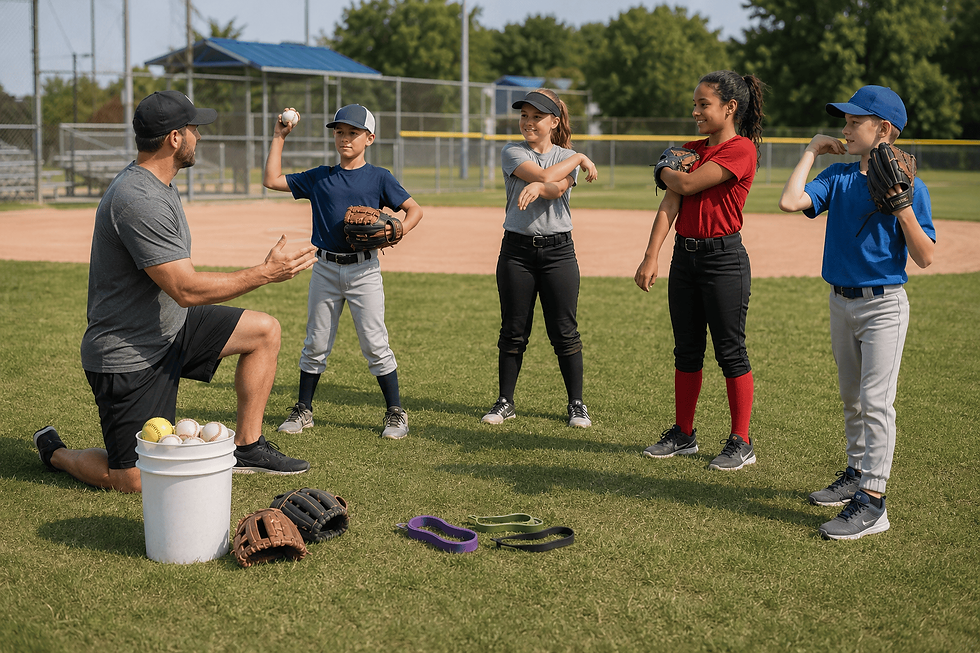
For baseball and fastpitch athletes, a smart warm-up may include:
light movement to raise body temperature
shoulder and arm activation
band work or tubing exercises when appropriate
easy catch or light throwing
gradual increase in distance and intensity
sport-specific throwing only after the body is ready
The key word is gradual.
Athletes should not go from sitting in the car to throwing as hard as they can. They should not rush through warm-ups because the game is about to start. They should not skip preparation because they feel young, strong, or excited.
Good habits protect the athlete over time.
Soreness Should Be Taken Seriously in Both Baseball and Fastpitch
Some soreness can be part of sports, but families should never ignore repeated pain, sharp pain, or soreness that changes how an athlete throws.
Warning signs may include:
pain during throwing
pain that continues after throwing
shoulder or elbow discomfort that gets worse
sudden loss of accuracy or velocity
changing mechanics to avoid pain
rubbing the shoulder or elbow
saying the arm feels heavy, tight, or dead
avoiding throws
swelling, numbness, or weakness
Families should not try to diagnose these issues on their own. If the athlete is in pain, if the discomfort continues, or if something does not feel right, it is always better to pause activity and speak with a qualified medical professional.
Parents Should Avoid Comparing Baseball and Fastpitch Too Closely
It is easy for parents to compare sports and say things like, “Baseball pitchers need more rest,” or “Fastpitch pitchers can throw more because the motion is different.”
But every athlete is different.
Age, strength, size, mechanics, physical maturity, position, training history, competition level, workload, recovery, and pain tolerance all matter. Two athletes can play the same sport, throw the same number of pitches, and respond very differently.
That is why arm care should be personal. Families should learn general guidelines, listen to coaches, communicate with athletes, and seek medical advice when needed.
The Best Arm Care Plan Is Consistent and Simple
The best plan is usually not the most complicated one. Families can start with a few simple habits:
warm up before throwing
build throwing intensity gradually
track heavy throwing days
respect rest and recovery
listen when the athlete reports soreness
avoid year-round overuse
communicate with coaches
seek medical help when pain continues or feels serious
These habits work for baseball players and fastpitch players.
Final Thought
Baseball and fastpitch may look different, but both require families to respect the throwing arm.
The goal is not to make athletes afraid of throwing. The goal is to teach them how to prepare, compete, recover, and communicate. When families understand the similarities and differences between baseball and fastpitch arm care, they can support their athletes with more confidence and better awareness.
Healthy arms help athletes stay on the field. Smart habits help them enjoy the game longer.
Disclaimer: This article is for educational and informational purposes only and reflects general sports-industry best practices. It is not medical advice. Always use your best judgment and consult a licensed physician, athletic trainer, or qualified medical professional regarding pain, injury, treatment, or return-to-play decisions.


Comments