
How Coaches Can Build Healthy Throwing Habits Without Overcoaching Young Arms
- NCS Team Writer

- 6 days ago
- 5 min read
One of the biggest responsibilities a youth baseball or fastpitch coach has is helping athletes learn how to throw correctly, confidently, and safely. Throwing is part of almost every practice and game, but because it happens so often, it can become easy to overlook.
A coach may spend time working on hitting mechanics, defensive footwork, baserunning, signs, and game strategy, while assuming the throwing arm is simply ready to go. But young arms need structure. They need warm-up time. They need rest. They need good habits repeated consistently.
The challenge for coaches is this: how do you teach healthy throwing habits without overcoaching every movement and making young athletes stiff, nervous, or robotic?
The answer is to build simple routines, teach awareness, and create a team culture where players understand that taking care of their arm is part of becoming a better athlete.
Start With a Simple Team Throwing Routine
The best throwing habits usually begin before the first ball is thrown. A good team routine does not need to be complicated. It just needs to be consistent.
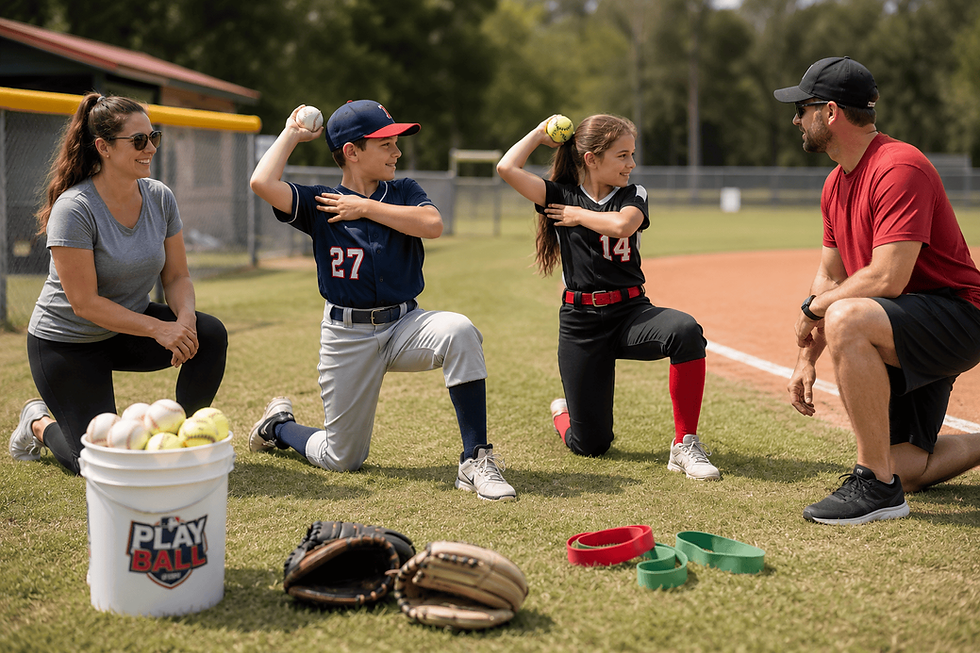
Before practice or games, coaches can build a short warm-up flow that includes:
light movement to get the body warm
shoulder and arm activation
band work or tubing exercises when appropriate
easy catch at short distance
gradual progression to longer or firmer throws
position-specific throwing only after the body is ready
This teaches athletes that throwing is something they prepare for, not something they rush into.
For young players, the routine matters as much as the exact drill. When athletes do the same basic preparation every day, they begin to understand what “ready to throw” feels like.
Teach the Whole Body, Not Just the Arm
One mistake coaches can make is treating throwing as only an arm action. In reality, throwing involves the feet, legs, hips, trunk, shoulder, elbow, wrist, timing, and direction.
Young athletes do not need a lecture on biomechanics, but they do need simple cues that help them use their whole body.
Helpful coaching phrases might include:
“Move your feet before you throw.”
“Point your body where you want the ball to go.”
“Use your legs and finish toward your target.”
“Throw under control before you throw harder.”
“Good throws come from good rhythm.”
These are simple, athlete-friendly cues. They help players build body awareness without overwhelming them.
When coaches overcorrect every detail, young athletes can become tense and unsure. When coaches teach simple movements and let athletes throw naturally, players often learn faster and feel more confident.
Avoid Turning Every Throw Into a Mechanics Lesson
There is a time to teach mechanics, but not every throw needs to be stopped, corrected, and analyzed. If a coach interrupts every movement, young athletes may start thinking too much instead of learning through repetition.
A better approach is to look for patterns.
If one throw sails, it may just be one bad throw. If several throws sail, then the coach can step in with one simple adjustment. If an athlete consistently drops the elbow, rushes the feet, or looks uncomfortable, that is when teaching becomes useful.
Coaches should ask themselves:
Is this a one-time mistake or a repeated pattern?
Is the athlete in pain or just learning?
Is the player tired?
Am I giving one clear cue or too many at once?
Great coaching is not about saying more. It is about saying the right thing at the right time.
Build Throwing Progressions Into Practice
Healthy throwing habits improve when practices are organized. Coaches can reduce unnecessary workload by planning when and how throwing happens.
A smart practice may include:
a clear warm-up period
controlled throwing progression
skill stations with reasonable reps
breaks between high-throw activities
position work that matches the athlete’s age and ability
recovery time after heavy throwing days
For example, if a team is doing a long defensive session, that may not be the best day to add extra bullpen work, high-volume catcher throws, or extended long toss. Coaches can protect arms simply by planning the practice with workload in mind.
This is especially important during tournaments, when athletes may play multiple games in one day or over a weekend. USA Baseball and MLB’s Pitch Smart program emphasizes age-based pitch limits, required rest, warming up properly, and taking time away from throwing during the year. (MLB.com)
Watch the Athletes Who Never Speak Up
Some athletes will tell you when their arm hurts. Others will not.
Coaches need to watch body language. A player may say they are fine while shaking the arm, lowering the elbow, avoiding throws, grimacing, or suddenly losing accuracy. A fastpitch player may continue throwing because she does not want to lose her spot. A baseball player may hide soreness because he wants to pitch, catch, or stay at shortstop.
Warning signs coaches should take seriously include:
sudden loss of velocity or accuracy
changing arm slot because of discomfort
rubbing the shoulder or elbow
avoiding throws
saying the arm feels heavy or tight
pain that continues after throwing
pain during rest
The American Academy of Pediatrics notes that baseball and softball have both acute injuries and overuse injuries, and that many overuse injuries can be reduced through prevention habits like limiting pitch volume and respecting rest. (AAP Publications)
Communicate With Parents Before There Is a Problem
Coaches do not need to wait until an athlete is hurt to talk to parents about arm care. In fact, one of the best things a coach can do is set expectations early.
At the start of the season, coaches can tell parents:
athletes should speak up about soreness
parents should communicate if the athlete has thrown outside team activities
lessons, camps, showcases, and other teams all add to workload
rest days are part of development
soreness should never be hidden to protect playing time
This creates a healthier culture. It also protects the coach, athlete, and family from misunderstandings.
Parents may not always know how much their child is throwing across multiple settings. A simple conversation can help everyone make better decisions.
Do Not Reward Toughness at the Expense of Health
Coaches often admire tough athletes, and that is understandable. Baseball and fastpitch require grit. Players have to compete through mistakes, pressure, and failure.
But throwing through pain should never be treated as a badge of honor.
A coach can still build toughness while teaching smart decision-making. The message should be:
“Compete hard, but be honest about pain.”
That kind of language helps athletes understand the difference between normal effort and warning signs. It also teaches that protecting the body is part of respecting the game.
Healthy Throwing Habits Create Better Players
Arm care is not just about preventing injury. It is also about helping players perform better. A player who is warmed up, moving well, and recovering properly is more likely to throw with confidence and consistency.
Healthy throwing habits help athletes:
stay available
improve accuracy
build confidence
recover between games
develop better long-term movement patterns
enjoy the sport longer
The goal is not to scare young athletes away from throwing. The goal is to teach them how to throw with awareness, preparation, and respect for their body.
Final Thought
Coaches do not need to overcomplicate arm care. They need to make it part of the team culture.
Start with a routine. Teach simple cues. Watch for fatigue. Plan throwing volume. Communicate with parents. Encourage athletes to speak up. Respect rest.
When coaches do those things consistently, they help young athletes develop not only stronger arms, but smarter habits. And those habits can stay with a player for the rest of their baseball or fastpitch journey.
Disclaimer: This article is for educational and informational purposes only and reflects general sports-industry best practices. It is not medical advice. Always use your best judgment and consult a licensed physician, athletic trainer, or qualified medical professional regarding pain, injury, treatment, or return-to-play decisions.


Comments