
How Coaches Can Create a Team Culture Where Athletes Feel Supported
- NCS Team Writer

- 5 days ago
- 7 min read
A coach can teach hitting.
A coach can teach throwing.
A coach can teach baserunning, defense, pitch calling, cutoffs, relays, practice routines, and game strategy.
But one of the most powerful things a coach can build is culture.
Team culture is the feeling athletes have when they show up. It is what players believe about themselves, their teammates, their coaches, and the environment around them. It is the standard for how people treat each other. It is the way mistakes are handled. It is the way effort is recognized. It is the way athletes are supported after hard moments.
In baseball and fastpitch, culture matters because the game is already full of failure. Athletes strike out. They make errors. They miss signs. They walk hitters. They get thrown out. They lose games. They sit on the bench. They compare themselves to others. They wonder if they are good enough.
A strong team culture does not remove those challenges.
It helps athletes face them with support, confidence, and accountability.
Support Does Not Mean Lowering Standards
Some coaches worry that talking about mental wellness, confidence, or emotional support means going soft. But support and standards can exist together.
A supportive coach can still expect athletes to hustle, listen, compete, be on time, respect teammates, and work hard.
The difference is how those standards are taught.
A fear-based culture says:
“Do this right or you will be embarrassed.”
A supportive culture says:
“We have high standards because we believe in you, and we will help you grow into them.”
Athletes need accountability. They also need to know that mistakes do not make them disposable.
The best coaches can be firm without being cruel. They can correct without humiliating. They can challenge athletes while still making them feel valued.
The Dugout Should Feel Safe, Not Soft
A safe dugout does not mean a lazy dugout. It does not mean athletes can do whatever they want. It does not mean everyone gets praised for everything.
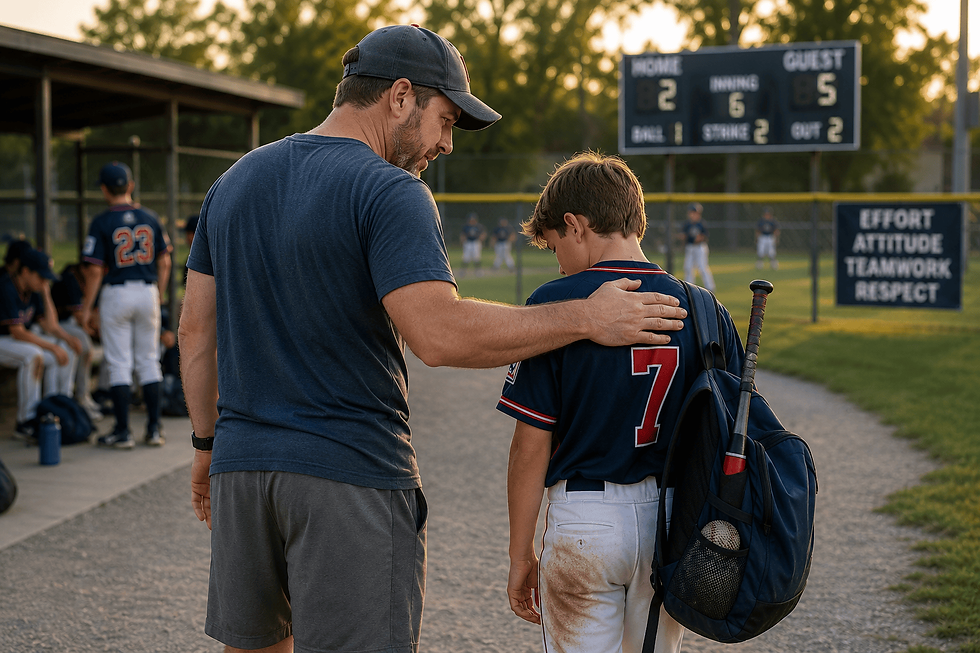
A safe dugout means athletes know they can make a mistake and still be coached with respect.
It means teammates do not mock each other after errors.
It means players are not afraid to ask questions.
It means athletes do not have to hide pain, fear, or confusion.
It means the coach sets the emotional tone.
In a healthy dugout, athletes can compete hard and still feel like they belong.
That sense of belonging matters. CDC notes that young people’s mental health is supported by feeling connected to school and family. Sports teams are not schools or families, but coaches can still create a powerful sense of connection, trust, and belonging for athletes.
Coaches Should Define the Team Standard Early
Culture is not built by accident. Coaches have to name it.
At the beginning of the season, a coach can set clear standards such as:
We respect teammates.
We do not embarrass each other.
We compete hard.
We learn from mistakes.
We communicate.
We do not blame.
We support the player who is struggling.
We control what we can control.
We represent ourselves, our families, and our team with class.
These standards should not just be printed on paper. They should be repeated, modeled, and reinforced throughout the season.
When the team knows the standard, the coach can point back to it during hard moments.
For example:
“That is not how we treat teammates.”
“Reset. We learn from mistakes here.”
“We compete with class.”
“Pick him up. That is what good teammates do.”
Simple language repeated consistently can shape behavior.
How Coaches Respond to Mistakes Teaches the Whole Team
Athletes watch how coaches respond when someone fails.
If a player makes an error and the coach reacts with anger or embarrassment, the whole team learns that mistakes are dangerous. Players may become tense, afraid, and more focused on avoiding failure than competing freely.
If a player makes an error and the coach responds with calm accountability, the team learns something different.
A coach might say:
“Next pitch.”
“Get your eyes back up.”
“You are still in this game.”
“Own it, learn from it, and want the next ball.”
That does not excuse the mistake. It teaches the athlete how to respond.
The response matters as much as the correction.
Praise What You Want Repeated
Coaches often correct what goes wrong, but they should also recognize what they want repeated.
Praise does not have to be dramatic. It just needs to be specific and sincere.
A coach can say:
“Great job backing up that throw.”
“I loved the way you picked up your teammate.”
“That was a professional reset after a tough at-bat.”
“You stayed locked in even after the error.”
“That is the effort we need.”
“That is what leadership looks like.”
Specific praise teaches athletes what matters.
It also helps players who may not be the stars feel seen. Not every athlete will hit home runs or strike out the side. But every athlete can hustle, communicate, support teammates, stay prepared, and respond well to adversity.
When coaches recognize those things, the culture gets stronger.
Make Communication Normal
Athletes should feel like they can talk to their coach respectfully.
That does not mean the coach has to discuss every decision, explain every lineup, or allow constant debate. But athletes should know there is a proper way to ask questions, share concerns, or request help.
A coach can create this by saying:
“If you are confused, ask.”
“If you are struggling, come talk to me.”
“If your arm hurts, tell me.”
“If something is going on off the field that affects you here, let us know.”
“If you need help, we will find the right adult to help you.”
This kind of communication helps athletes understand that speaking up is not weakness.
It is part of being responsible.
Do Not Make Playing Time the Only Way Athletes Feel Valued
Playing time matters. Athletes want to play. Parents care about it. Coaches have to make decisions.
But on a healthy team, playing time should not be the only way an athlete feels valued.
A player who is not starting can still feel respected. A player who is struggling can still feel important. A player who has a smaller role can still understand how they help the team.
Coaches can support this by communicating roles clearly and recognizing effort beyond the lineup.
For example:
“Your energy in the dugout matters.”
“You are one adjustment away.”
“Keep preparing. Your opportunity will come.”
“You helped us today by being ready.”
“You pushed your teammates in practice this week.”
This does not guarantee every athlete will be happy. But it does help athletes feel seen.
Coaches Should Avoid Public Shame
Correction is necessary. Public shame is not.
There is a difference between coaching an athlete and embarrassing an athlete.
A coach can correct effort, focus, mechanics, attitude, and decision-making without attacking the athlete’s identity.
Instead of:
“What is wrong with you?”
Try:
“That is not the standard. Reset and do it again.”
Instead of:
“You always mess that up.”
Try:
“We need better footwork there. Let’s fix it.”
Instead of:
“You are killing us.”
Try:
“Take a breath. Make the next pitch.”
Words matter.
Young athletes may remember the tone of a coach’s correction long after the game is over.
Teach Athletes How to Support Each Other
A supportive culture is not only coach to player. It is player to player.
Coaches should teach athletes how to respond when a teammate struggles.
Good teammate language includes:
“You’ve got the next one.”
“Pick your head up.”
“We’ve got you.”
“Next pitch.”
“Keep competing.”
“Good swing.”
“Stay with it.”
Coaches should also make it clear what is not acceptable:
blaming teammates
laughing at mistakes
eye rolling
negative dugout comments
gossip
excluding players
disrespecting umpires
quitting emotionally
Athletes are still learning. They need guidance on what good teammate behavior looks and sounds like.
Watch for Athletes Who Are Quietly Struggling
Not every struggling athlete acts out.
Some withdraw. Some stop smiling. Some avoid eye contact. Some lose energy. Some become unusually nervous. Some become perfectionists. Some seem fine in front of the team but fall apart later.
Coaches should not try to diagnose athletes. But they can notice patterns.
A coach might check in by saying:
“You seem a little quieter than usual. Everything okay?”
“I noticed you looked frustrated today. Do you want to talk for a minute?”
“I am not here to pry, but I want you to know we care about you.”
The goal is not to become the athlete’s therapist. The goal is to open a door and involve appropriate adults or professionals when needed.
Know When to Involve Parents or Professionals
Coaches should understand their role and their limits.
A coach can listen, support, encourage, and connect the athlete with appropriate help. But coaches should not try to act as a licensed mental health professional unless they are one.
If an athlete shares something concerning, the coach should involve the proper parent, guardian, school counselor, organization leader, or medical/mental health professional based on the situation.
Warning signs may include:
ongoing sadness or hopelessness
extreme anxiety around games
major mood changes
withdrawal from teammates
sudden loss of interest
repeated negative self-talk
panic-like responses
comments about self-harm
comments about not wanting to be alive
any safety concern
If there is immediate danger, call 911. In the United States, people can call or text 988 or use the 988 Lifeline chat for emotional distress or suicidal crisis support. The 988 Lifeline explains that counselors listen, provide support, and share resources that may help.
A Strong Culture Helps Prevent Burnout
Youth sports can be a powerful and fun way for young people to stay physically and mentally active, but the AAP also notes that some youth may feel pressure from parents, coaches, and society to measure success only by performance, which can contribute to stress and burnout.
Coaches can help reduce burnout by creating a healthier environment.
That includes:
giving athletes appropriate rest
making practices productive but not joyless
celebrating growth
avoiding constant fear-based motivation
encouraging multi-dimensional identity
respecting the athlete as a person
keeping fun in the game
communicating with parents
watching for emotional fatigue
A team can still compete to win while protecting the athlete’s long-term love for the game.
Final Thought
Coaches have more influence than they sometimes realize.
A coach’s words can build confidence or create fear. A coach’s reaction to mistakes can shape how athletes handle failure. A coach’s culture can make players feel seen, supported, challenged, and connected.
The best team cultures are not soft. They are strong.
They have standards. They have accountability. They compete. They care about winning. But they also care about the person wearing the uniform.
When athletes feel supported, they are more likely to communicate, learn, take healthy risks, recover from mistakes, and stay connected to the game.
That is good coaching.
And it is good leadership.
Disclaimer: This article is for educational and informational purposes only and reflects general sports-industry best practices. It is not mental health, medical, or crisis-care advice. Always use your best judgment and consult a licensed mental health professional, physician, school counselor, athletic trainer, or qualified professional regarding emotional distress, anxiety, depression, behavioral changes, or safety concerns. If there is immediate danger, call 911. In the United States, call or text 988 or use the 988 Lifeline chat for emotional distress or suicidal crisis support.


Comments