
Why Mental Wellness Matters in Baseball and Fastpitch Development
- NCS Team Writer

- 5 days ago
- 7 min read
Baseball and fastpitch are skill sports.
Athletes need to throw, catch, hit, run, field, communicate, compete, and make quick decisions. They need good mechanics, good practice habits, and the ability to handle pressure.
But development is not only physical.
An athlete can have talent, strength, speed, and good instruction, but still struggle if they are overwhelmed, afraid of failure, burned out, anxious, or constantly worried about disappointing others.
That is why mental wellness matters.
Mental wellness does not mean an athlete is always happy. It does not mean they never get nervous, frustrated, disappointed, or upset. It means they are learning how to handle the emotional side of the game in a healthier way.
In baseball and fastpitch, mental wellness supports confidence, focus, resilience, communication, effort, and long-term enjoyment.
And those things matter just as much as mechanics.
The Game Comes With Emotional Pressure
Baseball and fastpitch can be beautiful games, but they can also be emotionally challenging.
A hitter may fail more often than they succeed. A pitcher may feel responsible for every run. A catcher may feel pressure to lead. A shortstop may replay one error over and over. A young athlete may worry about playing time, making the team, keeping up with teammates, or being noticed by coaches.
Then add travel ball, tournaments, rankings, social media, recruiting, private lessons, team changes, parent expectations, and comparison.
That is a lot for a young athlete.
Adults may see a game. The athlete may feel like they are carrying their identity.
This is why parents and coaches have to pay attention to more than stats.
They have to pay attention to the person inside the uniform.
Confidence Is Part of Development
Confidence is not just something athletes either have or do not have. Confidence is built over time.
It grows when athletes feel prepared. It grows when they are supported. It grows when they know mistakes are part of learning. It grows when coaches teach instead of embarrass. It grows when parents love them the same after a bad game as they do after a great one.
Confidence can also be damaged.
It can be damaged by constant criticism, fear-based coaching, unrealistic expectations, comparison, yelling, public embarrassment, or pressure to perform perfectly.
A confident athlete is not an athlete who thinks they will always win. A confident athlete is someone who believes they can keep competing, keep learning, and keep improving even when the game is hard.
That kind of confidence helps development.
Fear of Failure Can Slow Growth
Baseball and fastpitch require athletes to fail.
Hitters strike out. Pitchers miss spots. Fielders make errors. Runners get thrown out. Teams lose games.
Failure is built into the sport.
But if an athlete becomes afraid of failure, they may stop playing freely. They may become tense. They may avoid risks. They may swing not to miss instead of swinging with confidence. They may throw not to make a mistake instead of trusting their training. They may become more focused on avoiding criticism than improving.
That is when development can slow down.
Parents and coaches can help by teaching athletes that failure is information.
A strikeout can teach timing. An error can teach footwork. A tough inning can teach breathing, focus, and adjustment. A loss can teach preparation and teamwork.
Failure is not the opposite of development.
Handled the right way, failure is part of development.
Mental Wellness Helps Athletes Stay Coachable
A mentally overwhelmed athlete may have a hard time receiving instruction.
They may shut down. They may get defensive. They may cry. They may act like they do not care. They may avoid eye contact. They may hear correction as criticism, even when the coach is trying to help.
That does not always mean the athlete has a bad attitude.
Sometimes it means they are embarrassed, anxious, tired, overloaded, or afraid of making another mistake.
Coaches can help by creating a teaching environment where athletes feel safe enough to learn.
That means using clear language, correcting behavior without attacking identity, and remembering that young athletes are still developing emotionally.
A coach might say:
“Let’s make one adjustment.”
“You are not in trouble. We are just learning.”
“Mistakes are part of practice.”
“Take a breath and try again.”
“I believe you can make this correction.”
That kind of coaching keeps athletes engaged.
Parents Shape the Emotional Experience
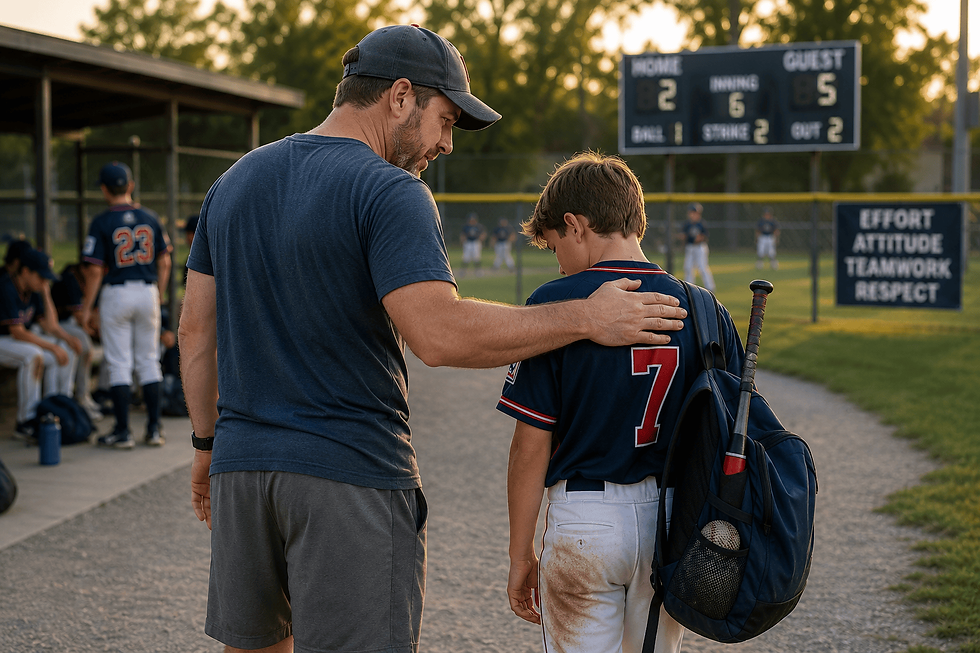
Parents have a powerful role in mental wellness.
The athlete may love their coach and teammates, but the parent’s voice often carries the most weight. The way a parent responds after games, talks about performance, discusses playing time, and handles disappointment can shape how the athlete feels about the sport.
Parents can support mental wellness by focusing on:
effort
growth
attitude
teamwork
courage
preparation
resilience
enjoyment
Parents can also ask better questions.
Instead of only asking, “Did you win?” or “How did you hit?” try asking:
“Did you have fun?”
“What did you learn today?”
“What are you proud of?”
“What was hard?”
“How did you support your teammates?”
“What do you want to work on next?”
Those questions help the athlete understand that their value is bigger than a box score.
Coaches Build Culture
Team culture affects mental wellness.
A team culture that only values winning may create pressure and fear. A culture that allows disrespect may create anxiety and conflict. A culture that ignores emotions may cause athletes to hide stress until it becomes heavier.
A healthy team culture can still be competitive.
It can still have standards. It can still expect effort, accountability, focus, and discipline.
But it also teaches athletes that they are human.
A healthy culture says:
We compete hard.
We respect each other.
We learn from mistakes.
We do not embarrass teammates.
We communicate.
We take care of our bodies and minds.
We support each other after hard moments.
We are more than one game.
That kind of culture helps athletes stay connected to the sport.
Mental Wellness Supports Physical Performance
The mind and body are connected.
When an athlete is tense, anxious, distracted, or emotionally overwhelmed, their body may not move as freely. Their timing may be off. Their breathing may become shallow. Their decision-making may slow down. Their mechanics may feel rushed.
On the other hand, an athlete who feels calm, prepared, and supported may be more likely to compete with confidence.
Mental wellness does not guarantee success. No tool can do that.
But it can help athletes stay present, recover from mistakes, and play with more freedom.
That matters in baseball and fastpitch because the game demands quick resets.
A hitter has to move on from a bad at-bat. A pitcher has to reset after a walk. A fielder has to want the next ball after an error. A catcher has to lead even after a tough inning.
Mental wellness helps athletes stay in the game emotionally.
Burnout Is Real
Some young athletes play a lot of games. They attend lessons, practices, camps, showcases, and tournaments. They may feel pressure to specialize early, keep up with teammates, impress coaches, and never fall behind.
Over time, this can wear on them.
Burnout may look like:
loss of interest
constant tiredness
irritability
anxiety before games
not wanting to go to practice
feeling trapped
frequent emotional breakdowns
declining performance
saying the sport is no longer fun
Adults should pay attention when an athlete who once loved the game starts seeming emotionally drained by it.
Sometimes athletes need rest. Sometimes they need better balance. Sometimes they need a conversation. Sometimes they need professional support.
Pushing harder is not always the answer.
Mental Wellness Is Not Weakness
One of the most important messages athletes can hear is this:
Taking care of your mental wellness is not weakness.
It is part of becoming a stronger athlete and a healthier person.
Athletes stretch their bodies. They lift weights. They practice mechanics. They take care of their arms. They hydrate. They learn strategy.
They can also learn how to breathe, reset, communicate, ask for help, handle pressure, and recover emotionally after hard moments.
That is not soft.
That is mature.
When Adults Should Seek Extra Support
Most sports emotions are normal. Athletes get nervous, frustrated, disappointed, excited, and upset. That is part of the game.
But adults should pay closer attention when emotional struggles become persistent, extreme, or concerning.
Warning signs may include:
ongoing sadness
extreme anxiety
major changes in mood
withdrawal from friends or teammates
loss of interest in things they used to enjoy
changes in sleep or appetite
frequent panic or emotional shutdowns
negative self-talk that feels intense or repeated
fear of playing
comments about self-harm or not wanting to be here
If parents, coaches, or caregivers are concerned, they should speak with a qualified mental health professional, physician, school counselor, or appropriate support resource.
If there is immediate danger, call 911. In the United States, call or text 988 or use the 988 Lifeline chat for emotional distress or suicidal crisis support.
Final Thought
Baseball and fastpitch development is about more than hitting, throwing, pitching, catching, and running.
It is also about learning how to compete, fail, recover, communicate, lead, and grow.
Mental wellness matters because athletes are not machines. They are young people trying to develop skills, confidence, identity, friendships, and resilience.
Parents and coaches do not need to be therapists. But they can create environments where athletes feel supported, respected, and safe enough to grow.
When athletes are mentally well, they are more likely to enjoy the game, trust their training, bounce back from mistakes, and stay connected to the sport.
That is good for performance.
But more importantly, it is good for the athlete.
Disclaimer: This article is for educational and informational purposes only and reflects general sports-industry best practices. It is not mental health, medical, or crisis-care advice. Always use your best judgment and consult a licensed mental health professional, physician, school counselor, athletic trainer, or qualified professional regarding emotional distress, anxiety, depression, behavioral changes, or safety concerns. If there is immediate danger, call 911. In the United States, call or text 988 or use the 988 Lifeline chat for emotional distress or suicidal crisis support.


Comments