
What Parents Should Know About Arm Care Before Their Athlete Starts Travel Ball
- NCS Team Writer

- 6 days ago
- 4 min read
When a young athlete starts travel ball, most parents naturally focus on the exciting parts first. They think about the new team, the uniforms, the tournaments, the friendships, and the opportunities ahead. But one of the most important things a parent can understand before the season begins is arm care.
Whether your athlete plays baseball or fastpitch, healthy throwing habits matter. Travel ball usually means more games, more practices, more throwing, and more repetition than recreational ball. That can be great for development, but it also means families need to be more aware of how the arm is feeling, how much throwing is taking place, and when rest is needed.
The good news is that parents do not need to become medical experts to be helpful. They just need to become more observant, more consistent, and more willing to listen when their athlete’s body is trying to say something.
Travel Ball Usually Means More Throwing Than Parents Expect
One of the first things parents notice about travel ball is how quickly the throwing volume adds up. It is not just the game itself. It is warm-ups before the game, throws between innings, long toss, infield or outfield work, extra practice reps, bullpen sessions, and sometimes multiple games in one day or weekend.
That is why arm care should not begin only when soreness shows up. Arm care should be part of the routine from the beginning.
Parents can help by asking a few simple questions:
How many days in a row has my athlete thrown?
Did they pitch, catch, or make a lot of hard throws this weekend?
Are they also throwing at practice, lessons, or at home?
Are they getting enough rest between high-volume throwing days?
Those questions alone can help families become more aware of overall workload.
Arm Care Is More Than Just “Stretching”
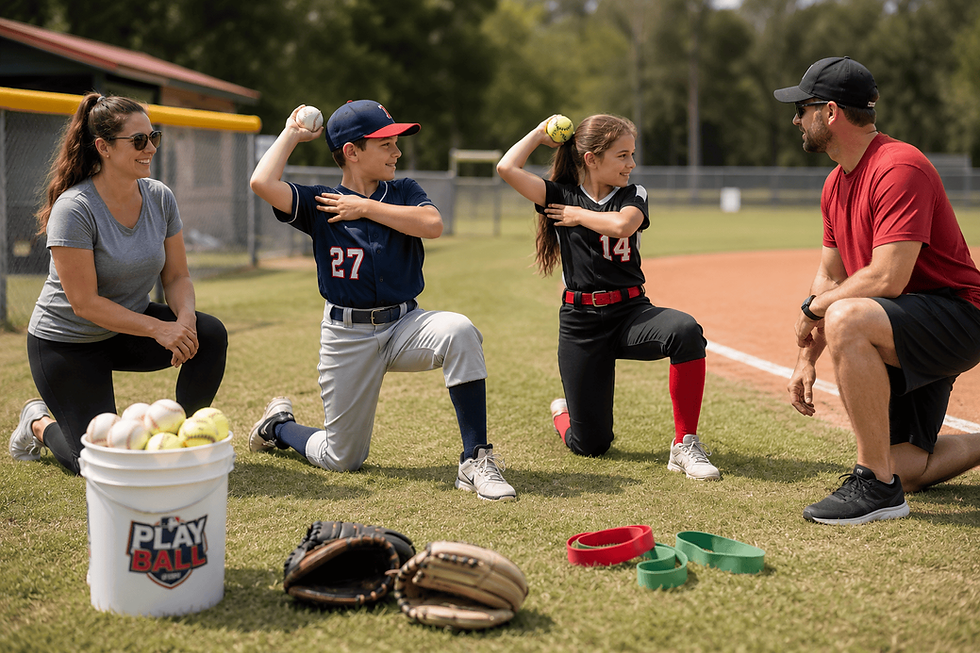
A lot of parents hear the phrase arm care and assume it just means stretching before a game. Stretching is part of it, but good arm care is really about preparing the body, supporting the smaller muscles around the shoulder and arm, and helping the athlete recover properly after throwing.
A solid arm care routine often includes:
light dynamic warm-up
band work or tubing exercises
gradual throwing progression
hydration
recovery work after throwing
rest when needed
This is one reason programs like J-Bands have become so popular in baseball and fastpitch. They help athletes activate and strengthen the smaller support muscles that help the larger muscles function better during throwing.
Soreness Should Never Be Ignored
Not every sore arm means injury, but soreness should always be respected. Young athletes do not always describe pain clearly. Some kids will tell you immediately when something hurts. Others will stay quiet because they do not want to come out of the lineup, disappoint their coach, or miss a tournament.
Parents should pay attention to comments like:
“My arm feels heavy.”
“My elbow feels tight.”
“It hurts when I throw hard.”
“It only hurts a little.”
“I’m fine,” even though the athlete is rubbing the shoulder or arm.
If soreness keeps showing up, gets worse, changes the throwing motion, or causes the athlete to avoid throwing normally, it deserves attention. Ignoring repeated soreness is one of the biggest mistakes families can make.
Rest Is Part of Development
One of the biggest misconceptions in youth sports is that more always equals better. More practice, more games, more innings, more showcases, more lessons. But when it comes to the throwing arm, rest is not a weakness. Rest is part of development.
Arms do not get stronger only by throwing. They also get stronger by recovering from throwing.
That means parents should feel comfortable building in rest days, monitoring back-to-back throwing demands, and not forcing extra throwing just because another parent or team seems to be doing more. Long-term health matters more than short-term volume.
Parents Should Watch for Workload, Not Just Pitch Counts
Pitch counts are important, but they are not the only thing that matters. A player may not have pitched much, but they might still have thrown a lot from shortstop, catcher, or the outfield. A fastpitch player may not be a primary pitcher, but she may still be taking hundreds of throws during practices and games.
That is why parents should think in terms of total throwing workload, not just official pitching numbers.
A few smart habits include:
tracking heavy throwing days
noticing when the athlete also has lessons or extra workouts
communicating with coaches if the athlete is overworked
making sure recovery becomes part of the schedule
The goal is not to panic over every throw. The goal is simply to stay aware.
Communication With Coaches Matters
Most coaches appreciate parents who communicate respectfully and early. If your athlete says the arm is sore, do not wait until the middle of a game to mention it. Let the coach know ahead of time. Good coaches want healthy athletes, and clear communication helps everyone make better decisions.
Parents should not feel guilty for speaking up when something feels off. That is part of protecting the athlete.
The Best Thing Parents Can Do
Before your athlete begins travel ball, the best thing you can do is decide that arm care will be a priority from day one. You do not need to overcomplicate it. Just stay engaged, ask good questions, encourage a proper warm-up routine, take soreness seriously, and respect rest and recovery.
Travel ball can be a great experience for athletes and families. With the right habits in place, parents can help their athletes enjoy the game, develop their skills, and stay healthier over the long haul.
Final Thought
A young athlete only gets one arm. Wins and losses will come and go, but healthy habits can protect a player’s future and help them enjoy the sport much longer. The earlier parents understand arm care, the better prepared they will be to support their athlete in travel ball.
Disclaimer: This article is for educational and informational purposes only and reflects general sports-industry best practices. It is not medical advice. Always use your best judgment and consult a licensed physician, athletic trainer, or qualified medical professional regarding pain, injury, treatment, or return-to-play decisions.


Comments